German C1 Course in Delhi and Online
C1 is the level German taught university programmes generally require. There is one thing to know before you start, because it catches students out every year. German universities accept a specific short list of certificates, and a general C1 certificate is not automatically one of them. Which examination you sit matters as much as which level you reach. We teach C1 one to one and in small groups, scheduled around you rather than in fixed batches.
| Label | Value |
|---|---|
| Level | C1, advanced |
| Prerequisite | B2, or a placement test |
| Class hours | Typically 200 to 280 hours, adjusted to your starting point |
| Delivery | One to one, or small group when one forms |
| Schedule | Built around you. No fixed batch, no waiting for a start date |
| Exam prepared for | TestDaF, telc Deutsch C1 Hochschule, Goethe C1, or DSH in Germany |
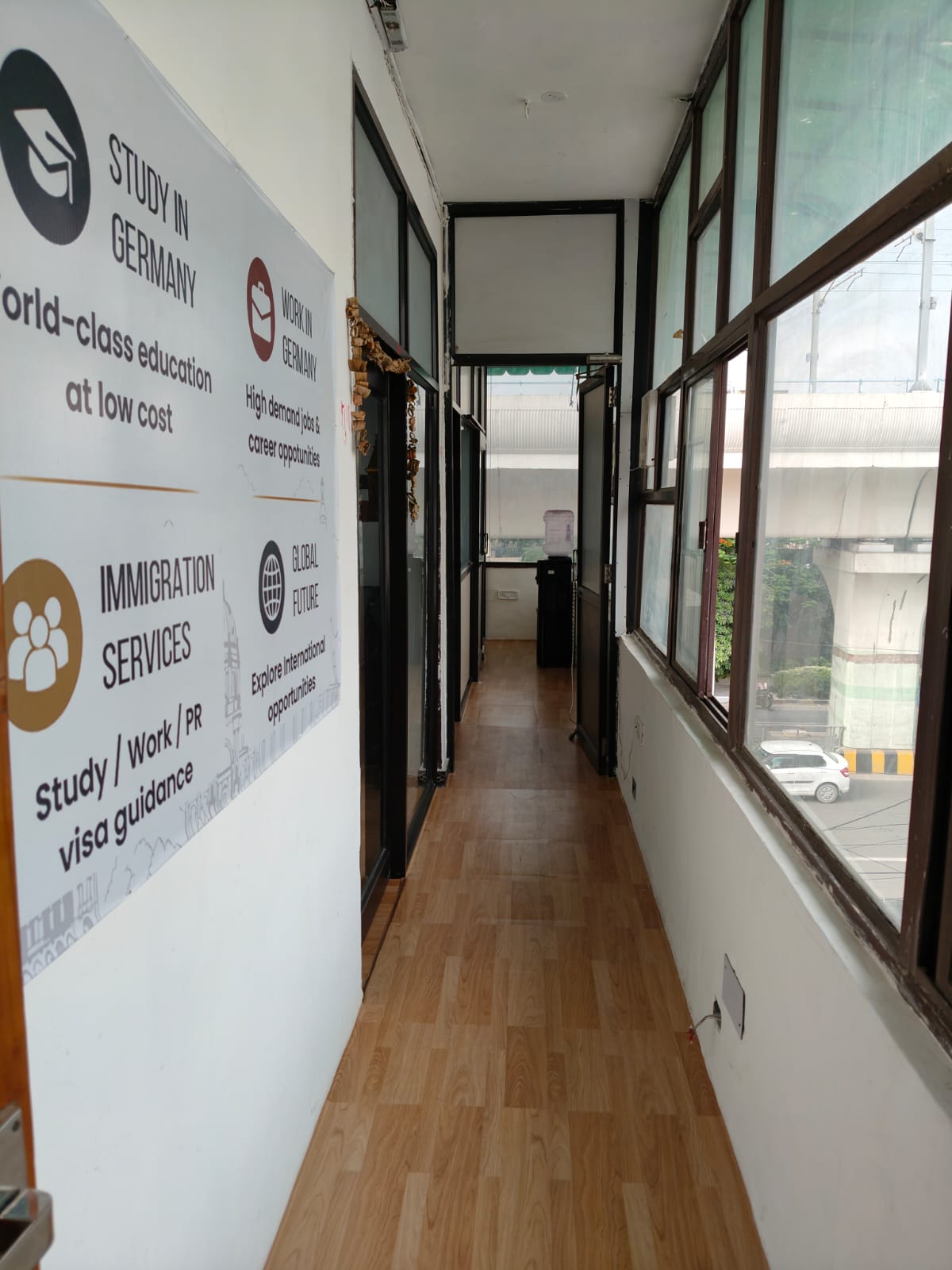
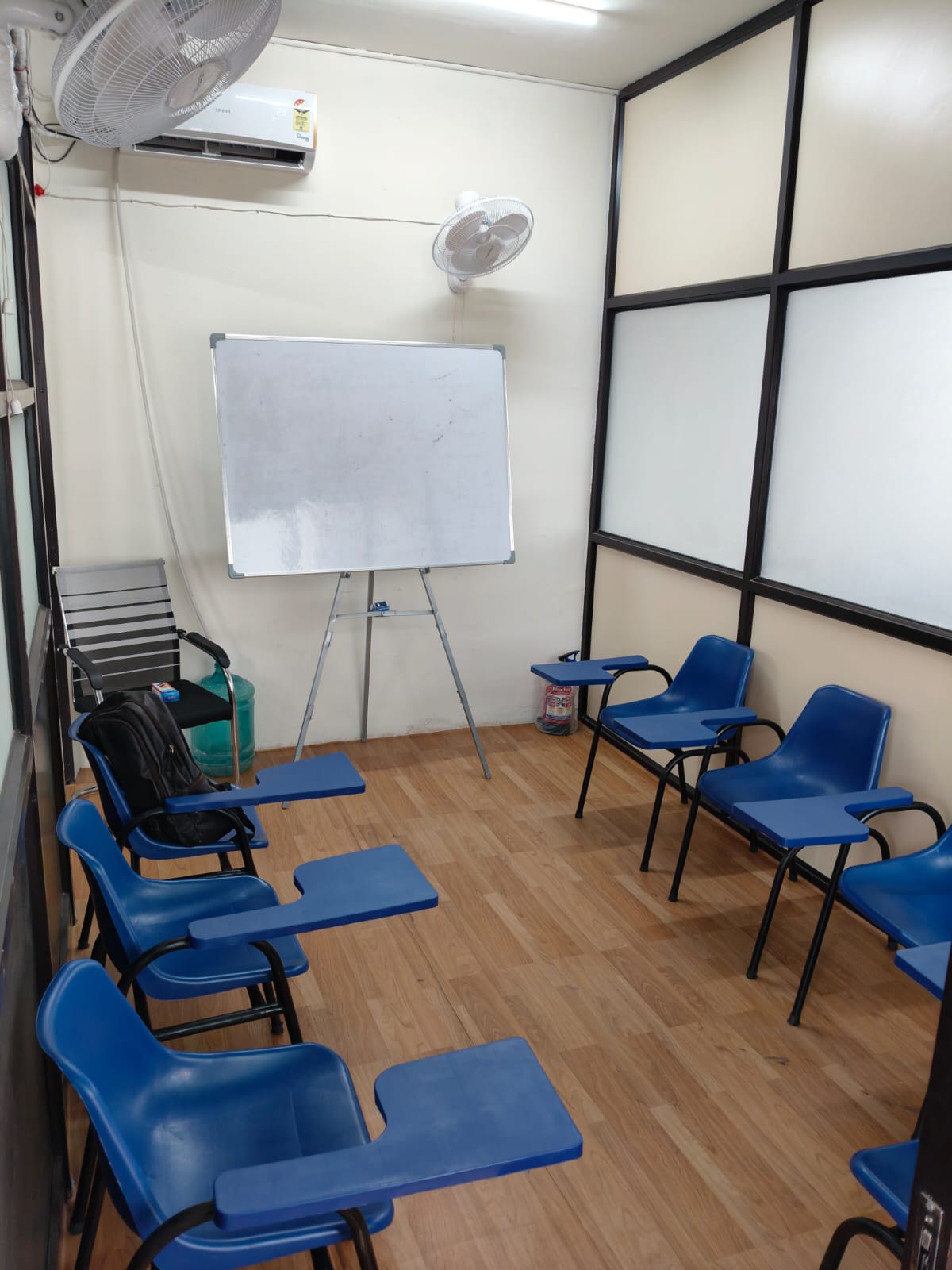
| Mode | Classroom in Rohini, or live online |
| Fee | Quoted after a consultation. Registration is ten percent, examination fee separate |
Which C1 certificate do German universities actually accept?
This is where students lose a year. German universities work from a short list of accepted language qualifications agreed between the education ministries, and reaching C1 is not the same as holding one of them.
| Certificate | Where you can take it | Acceptance |
|---|---|---|
| TestDaF, grade TDN 4 in all four parts | Worldwide, including India, several times a year | Accepted by all German public universities. Does not expire |
| DSH, grade DSH 2 | Only in Germany, at the university itself | Accepted everywhere. Set by each university, so format varies |
| telc Deutsch C1 Hochschule | Language schools worldwide | Widely accepted. Must be the Hochschule variant, not a general telc C1 |
| Goethe Zertifikat C2 | Goethe Institut | Accepted. Harder than C1 and more preparation than most students need |
| Goethe Zertifikat C1 | Goethe Institut | Accepted by some universities but not universally. Check with your programme |
| DSD II | Only at accredited German schools abroad | Cannot be taken independently |
Two traps in that table. First, a Goethe C1 is a real and respected qualification, but it is not universally accepted for university admission, and a student who takes it assuming otherwise can find their application blocked. Second, telc offers both a general C1 and a C1 Hochschule, and only the Hochschule version is designed for university entry. The names are one word apart and the consequences are not.
Our advice. If you are applying from India and want one certificate that works at every public university, TestDaF is the straightforward answer. It is available here, it never expires, and one result covers all your applications. Some universities also prefer a certificate less than two years old even where it technically does not expire, and language heavy subjects such as medicine and law may demand more than the standard level. Always check the admissions page of your specific programme, because this requirement varies more than any other.

Who should take the C1 course?
- Applicants to German taught degrees. This is the main group. Both bachelors and masters programmes taught in German generally require a C1 level qualification from the accepted list.
- Professionals who need German for responsibility rather than participation. C1 is the level at which you can lead a meeting, negotiate, and hold accountability in German rather than merely take part.
- Anyone heading toward teaching or translation. C1 is the practical entry point, with C2 as the professional standard.
Who should not take it. If you are a nurse, an Ausbildung applicant or a general skilled worker, B2 is your destination and C1 is a use of time and money that will not change your outcome. We will say so rather than sell you the level.
How is the C1 course delivered?
Most people at C1 are not looking for a batch. They are working, applying to universities, or fitting German around a job, and they need the course to bend around their schedule rather than the other way round. So we run C1 one to one and in small groups, built with you rather than published in advance.
- You choose the days and times, and the schedule is built around them
- You start when you are ready, without waiting for a batch to fill
- The pace is set by you, so a strong reader who needs work on speaking spends the hours where they count
- Preparation is matched to your specific examination, TestDaF or telc C1 Hochschule, from the first session rather than only at the end
The trade off is real and worth saying. You do not get a batch of classmates to practise with, and at C1 discussion practice matters more than at any lower level. We build that in through structured speaking tasks with the trainer. If you would rather have a group, tell us and we will let you know when enough students reach the same level to form one.
What will you be able to do after C1?
C1 is described as effective operational proficiency, which in practice means the language stops being the obstacle.
- Understand demanding longer texts and recognise meaning that is implied rather than stated
- Express yourself fluently and spontaneously without visibly searching for words
- Produce clear, well structured, detailed text on complex subjects
- Follow university lectures, take notes and participate in seminar discussion
- Read academic and professional literature at working speed
What C1 will not do. You will still be slower than a native speaker in unfamiliar specialist fields, and idiom and regional accent can still trip you. C1 also takes longer than students expect. Reaching it from zero commonly means somewhere in the region of 750 to over 1000 hours of study in total. Plan the timeline before you plan the application.
What does the C1 course cover?
Six areas, weighted toward academic language because that is what the accepted examinations test. Because the course is built around you, the balance between them shifts according to where you are strong and where you are not.
| Area | Language focus | You will be able to |
|---|---|---|
| Academic reading | Dense text, nominal style, inference and implied meaning | Read academic text at working speed |
| Academic writing | Essay structure, argument development, citation conventions | Write a structured academic argument |
| Lecture and note taking | Extended listening, signposting language, note strategies | Follow a lecture and take usable notes |
| Discussion and presentation | Seminar language, hedging, disagreement, sustained speaking | Present and defend a position |
| Precision and style | Advanced grammar consolidation, register shifting, idiom | Choose the right register for the situation |
| Examination preparation | Timed mocks in the format of your chosen examination | Sit TestDaF or telc C1 Hochschule under real conditions |
Examination preparation is run separately for each paper, because TestDaF and telc C1 Hochschule differ in structure, timing and marking. Tell us which one you are sitting at the consultation so the preparation is the right one from the start rather than generic.
What does the C1 course cost?
The fee is quoted after a consultation rather than published as a fixed price, and the reason is straightforward. C1 is built around your target examination, your starting point and the hours you can commit, so two students at the same level can genuinely need quite different amounts of teaching. Quoting a single figure for everyone would mean overcharging half of you.
Two things we can tell you before the consultation. Registration is ten percent of the course fee, the same as on every other level, so once you know the teaching cost you know the total. And the examination fee is separate again, paid to TestDaF or telc directly rather than to us, so budget for it as a third item rather than assuming it is included.
Book a consultation and you will leave it with three things: which certificate your target university actually accepts, roughly how many hours you need from where you are today, and the total cost. No obligation to enrol afterwards.
What comes after C1?
For almost every university applicant, nothing. C1 with the right certificate completes the language requirement and the next step is the application itself. C2 is worth taking in two situations only. If you intend to teach German, translate or interpret professionally. Or if you are sitting Goethe examinations rather than TestDaF or telc, because the Goethe C2 is universally accepted for university admission where the Goethe C1 is not.
Frequently asked questions
Is Goethe C1 accepted for German university admission?
Not universally. Some universities accept it and others do not, because the standard accepted list centres on TestDaF, DSH 2, telc Deutsch C1 Hochschule and Goethe C2. A Goethe C1 is a respected qualification, but if university admission is your goal, verify acceptance with your specific programme before you book the examination.
What is the difference between telc C1 and telc C1 Hochschule?
The Hochschule version is designed specifically for university entry and is the one recognised for admission. A general telc C1 is a valid language certificate but is not the university variant. The names differ by one word and confusing them can block an application, so check the exact wording on your certificate.
Does a course completion certificate count for university admission?
No. A letter from a language institute, including ours, is not an accepted qualification. German universities work from a short list of examination certificates, and a completion letter appears on none of it. You have to sit and pass one of the accepted papers, and declaring your own level counts for nothing at admission.
Should I take TestDaF or DSH?
TestDaF if you are applying from India, because it is available here, accepted at all German public universities, does not expire, and one result covers every application. DSH is taken on campus in Germany and set by the individual university, so it suits students already there, often through a Studienkolleg or a language programme.
Can I get a German visa without any language certificate?
For several visa types, yes. An EU Blue Card carries no German language requirement at all. The Opportunity Card accepts B2 English in place of A1 German. English taught study programmes usually need none for admission. A German taught degree is one of the routes where a certificate is genuinely required, and only from the accepted list.
Do you run C1 in batches?
No. C1 is taught one to one or in small groups, scheduled around you, because almost everyone at this level is working or applying to universities and needs the timing to be flexible. You start when you are ready rather than waiting for a batch to fill. If enough students reach C1 together we will tell you.
What does the C1 course cost?
The fee is quoted after a consultation, because the course is built around your target examination, your starting point and the hours you can commit. Registration is ten percent on top, and the examination fee is paid to the examination body separately. The consultation is free and you will leave it knowing the total.
Do I need C1 for an English taught programme in Germany?
Usually not for admission. English taught programmes generally set an English requirement instead. You will still want German for daily life, part time work and the visa interview, and for staying on after graduation, but you do not need C1 to be admitted.
Do nurses need C1?
No. Nursing recognition in Germany is built on B2, and C1 will not speed up or improve that process. If you are a nurse and someone is recommending C1, ask them what specifically it unlocks. For a small number of senior or specialist clinical roles it may help, but it is not part of the recognition pathway.