
German B2 Course in Delhi and Online
B2 is where most Germany plans actually land. It needs 180 to 220 hours of class time on top of B1. B2 is the mandatory language level for nursing recognition in Germany, and below it the recognition process cannot be completed at all. It is also what healthcare Ausbildung expects, what better paying German language roles in India ask for, and where you begin working in German rather than around it.
| Label | Value |
|---|---|
| Level | B2, upper intermediate |
| Prerequisite | B1, or a placement test |
| Class hours | 180 to 220 hours |
| Duration | 2.5 months intensive, 4 months regular, longer on weekends |
| Exam prepared for | Goethe Zertifikat B2, telc Deutsch B2, or telc B2 Pflege for nurses |
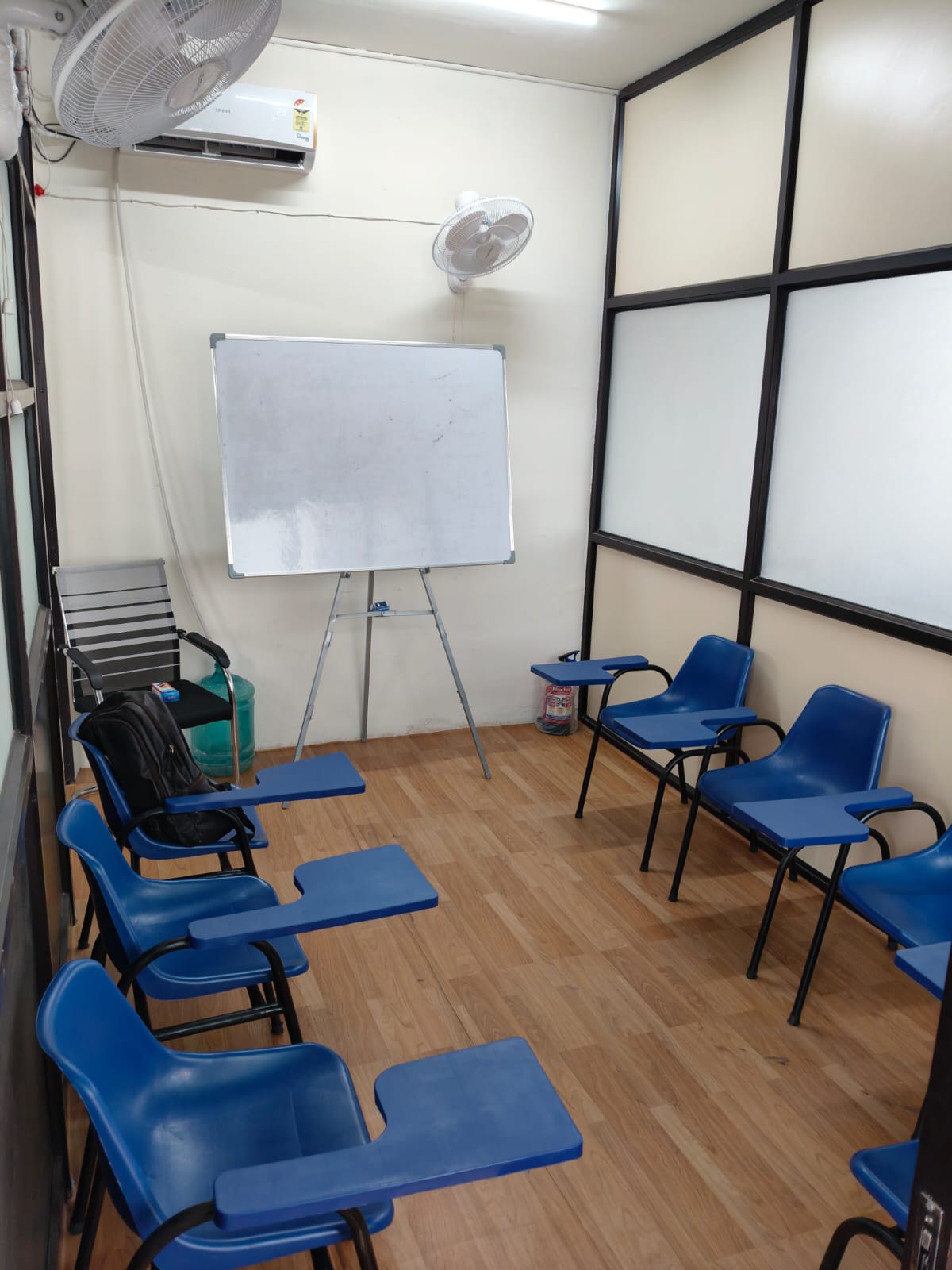
| Mode | Classroom in Rohini, or live online |
| Batch size | 7 to 10 students, capped |
| Course fee | Rs 21,000 standard, Rs 19,000 founding batch |
General B2 or B2 Pflege? The distinction that matters
There are two B2 examinations and choosing the wrong one costs a nurse several months. A general B2 tests everyday and workplace German. The nursing specific examination, telc Deutsch B2 Pflege, tests language in clinical situations, meaning patient communication, medical terminology, care documentation and shift handover. They sit at the same level of difficulty. They are not interchangeable.
Many German states and hospitals specifically want the nursing version, and some recognition authorities will accept a general B2 while the employer will not, or the reverse. A general Goethe B2 is accepted by state recognition authorities and by most employers, which is why it remains the safer default when you do not yet know where you are going. If you already have an employer or a target state, ask them which paper they want before you book anything.
Our position. If you are a nurse without a confirmed employer, take the general B2 first, because it is universally accepted and keeps every door open. If you have a confirmed employer or a target state that names the nursing paper, take that one. We will tell you which applies to you rather than selling you both.
Who should take the B2 course?
- Nurses. B2 is the mandatory minimum for nursing registration across German states, and recognition cannot be completed below it. Whether you take the general or the nursing paper depends on the section above.
- Healthcare and elderly care Ausbildung applicants. Patient facing training is held to B2 from the start rather than B1, because you are working with people from your first week.
- General Ausbildung applicants aiming to be competitive. B1 makes you eligible. B2 makes you shortlisted, and employers have been raising the bar steadily.
- Working professionals. B2 is where the range of roles widens and the salary conversation changes, in Germany and in Indian multinationals alike.
- Some Masters applicants. A number of German taught Masters programmes accept B2 rather than C1, though most do not. Check the specific programme rather than assuming either way.
What will you be able to do after B2?
B2 is the level at which you stop translating in your head and start thinking in the language during a conversation.
- Understand extended speech and follow complex argument on a familiar subject
- Interact with enough fluency and spontaneity that conversation with a native speaker is comfortable for both of you
- Present a clear detailed argument, defend a viewpoint and weigh advantages against disadvantages
- Write clear structured text, including a report, a formal letter or professional documentation
- Read articles and reports on contemporary issues and grasp the writer's position
- Work in German, including handovers, meetings and written records, if you have the vocabulary of your field
What B2 will not do. Academic German at university level is still beyond it, which is why German taught degrees generally ask for C1. Idiom, humour and fast regional speech will still catch you out. And B2 in a classroom is not the same as B2 on a ward. Workplace German is harder than examination German, which is why we build clinical and workplace vocabulary into the course rather than only teaching to the paper.
What does the B2 syllabus cover?
Six modules. Module five runs in two variants, a general track and a healthcare track, so nurses build clinical language rather than general workplace language.
| Module | Theme | Grammar and language | You will be able to |
|---|---|---|---|
| 1 | Complex argument | Extended connectors, nominal style, word order in long sentences | Structure an argument across several paragraphs |
| 2 | Formal and written register | Passive in all tenses, participle constructions, formal correspondence | Write reports and formal documentation |
| 3 | Reported speech and precision | Konjunktiv I and II, indirect speech, verbs with fixed prepositions | Report what others said accurately and hedge precisely |
| 4 | Contemporary issues | Advanced vocabulary building, register shifting, idiom | Discuss news, policy and abstract topics |
| 5a | General track: workplace | Meeting language, negotiation, presentation | Handle professional situations in German |
| 5b | Healthcare track: clinical | Medical terminology, patient communication, care documentation, handover | Work a shift, document care, brief a colleague |
| 6 | Examination preparation | Full timed mocks in the format of the paper you have chosen | Sit the general B2 or the B2 Pflege under real conditions |
Which certificate does B2 give you?
| Certificate | Awarded by | Best for |
|---|---|---|
| Goethe Zertifikat B2 | Goethe Institut, Max Mueller Bhavan | The safe default. Accepted by state recognition authorities and virtually all employers |
| telc Deutsch B2 | telc GmbH | General purpose, widely accepted by employers |
| telc Deutsch B2 Pflege | telc GmbH | Nurses with a confirmed employer or target state that asks for the nursing paper |
| OeSD Zertifikat B2 | Austrian Language Diploma | Recognised, less common in India |
Goethe examination centres operate in several Indian cities including Delhi, which matters at B2 because slots are in higher demand than at the lower levels. Book early. Confirm the current format and pass requirements with the examination body before you register.
A note for nurses on sequencing. Full professional recognition in Germany is administered by each state rather than nationally, and the language certificate is only one part of it. Your qualification is assessed separately, and a partial recognition outcome usually leads to either an adaptation course or a knowledge examination. B2 is what makes the process possible, not what completes it. We can walk you through where the language sits in the wider recognition sequence.
Batch options, duration and fee
| Batch type | Days | Class length | Duration | Next start |
|---|---|---|---|---|
| Weekday regular | Monday to Friday | 2 hours a day | 4 months | Ask us for the date |
| Weekday fast track | Monday to Friday | 4 hours a day | 2 months | Ask us for the date |
| Weekend | Saturday and Sunday | 4 hours a day | 5.5 to 6 months | Ask us for the date |
| Live online | Monday to Friday | 1.5 hours a day | CONFIRM | Ask us for the date |
| One to one | On request | On request | On request | On request |
Build note on the arithmetic. The weekend batch delivers about 200 hours, which sits neatly inside the stated 180 to 220. Weekday regular and fast track both deliver about 174, marginally below the floor. Live online at one and a half hours a day over four months delivers about 130, a third short, and it is held as CONFIRM. See Section 6, items 1 and 2.
Build note on the dates. On this page in particular the missing dates matter, because a nurse is planning a visa timeline around your batch calendar rather than simply choosing a class.
| Item | Standard | Founding batch |
|---|---|---|
| Course fee | Rs 21,000 | Rs 19,000 |
| Registration fee | Rs 2,100 | Rs 1,900 |
| Study material | Soft copies and notes, included | Included |
| Mock examinations | Included | Included |
| Examination fee | Paid directly to the examination body, not to us | Same |
| Instalments | Instalments and EMI available | Available |
The registration fee is ten percent of the course fee and is shown above as a rupee figure so you do not have to work it out. The examination fee is paid to the examination body directly and is separate from both. If you sit the nursing paper rather than the general one, ask us about the examination cost, because the two are priced differently by the examination body.
Want the exact total for your batch? Book a free demo class and we will give you the full figure before you commit to anything, including registration, any instalment plan, and what the examination will cost you separately. No obligation to enrol after the demo.
Should you take B2 in the classroom or online?
At B2 the answer depends more on what you are using German for than on the format itself. If you are a nurse working toward the nursing paper, the classroom has a real edge, because clinical role play, handover practice and hospital vocabulary correct better face to face, where a trainer can catch posture, tone and terminology together rather than through a screen.
If you are a working professional building general fluency, live online works just as well at B2, because you already have enough vocabulary to sustain a real conversation without constant in person correction. Same trainer, same batch, same schedule either way. If you are working, outside Delhi, or your week moves around, online you attend beats classroom you skip.

What comes after B2?
For most nurses and most Ausbildung applicants, nothing. B2 is the destination and the next step is the recognition process or the job itself rather than another level. For university applicants to German taught programmes, C1 follows, and it is a longer climb than the gap between B1 and B2 suggests. For working professionals, C1 is worth taking only if your role genuinely requires it.
Are you a nurse planning the Germany route?
Then B2 is the level that decides your timeline, and which B2 you sit decides whether your certificate is accepted where you are going. Talk to us before you book an examination. We would rather spend twenty minutes on the phone than watch you sit the wrong paper.
Frequently asked questions
How long does the German B2 course take?
B2 needs 180 to 220 hours of class time on top of B1. Our fast track batch runs four hours a day over about two months and the regular weekday batch runs two hours a day over four months. B2 also demands more independent reading than the lower levels, so budget time outside class as well.
What is the fee for the B2 German course in Delhi?
The B2 course fee is Rs 21,000, currently Rs 19,000 for our founding batch. Registration is ten percent on top, so Rs 2,100 and Rs 1,900. Study material and mock examinations are included and instalments are available. The examination fee is separate and differs between the general paper and the nursing paper.
What is the difference between B2 and B2 Pflege?
They test the same level but in different contexts. A general B2 covers everyday and workplace German. The telc B2 Pflege tests clinical language, meaning patient communication, medical terminology, care documentation and handover. Many German states and hospitals specifically want the nursing paper, so ask your employer or target state before booking.
Which B2 should a nurse take?
If you have a confirmed employer or a target German state, take whichever paper they name. If you do not yet know where you are going, the general Goethe B2 is the safer default, because it is accepted by state recognition authorities and by virtually all employers and keeps every option open.
Is B2 mandatory for nursing in Germany?
B2 is the language level required for nursing registration across German states, and the recognition process cannot be completed below it. B1 allows you to work as a nursing assistant while recognition is in progress, but full registration as a nurse requires B2. Confirm the current requirement with the recognition authority in your target state.
Can I get a German visa without any language certificate?
For several visa types, yes. An EU Blue Card carries no German language requirement at all. The Opportunity Card accepts B2 English in place of A1 German. English taught study programmes usually need none for admission. Nursing is not one of those routes, because recognition itself requires B2 regardless of how you enter the country.
Does a course completion certificate count for recognition?
No. A letter from a language institute, including ours, is not a language qualification. Recognition authorities accept examination certificates from bodies such as Goethe, telc or the Austrian OeSD. You have to sit and pass the examination, and declaring your own level is not accepted anywhere in the recognition process.
Is B2 enough to work comfortably in Germany?
For most roles, yes, with an honest caveat. B2 in an examination room is not the same as B2 on a ward or in a meeting, because workplace German is faster, more idiomatic and full of field specific vocabulary. That is why the course builds clinical or workplace language rather than only preparing you for the paper.
How much harder is B2 than B1?
Considerably, but in a different way. B1 is where the grammar load peaks. B2 is where precision and range take over, meaning you already know the structures and now have to use them accurately and quickly. Most learners find B2 less bewildering than B1 but more demanding of consistent work.